Denmark's grid emergency plan takes effect, placing most data centres last in line
From 12 October, Energinet and Danish grid companies rank connection requests in four categories instead of by filing order. Ordinary data centres fall into the last category, while those linked to critical functions can be placed first.
Denmark's new rules for prioritising connections to the electricity grid take effect today, 12 October, replacing the first come, first served principle with a politically set ranking. The Folketing adopted the emergency plan for the grid with a broad majority on 1 October, according to the Ministry of Climate, Energy and Utilities.
Under the political agreement behind the law, Energinet and the grid companies place connection requests in four categories. Category one covers normal load growth for existing customers, new households, smaller businesses and critical functions such as defence, health and emergency preparedness. Category two covers direct electrification, renewables, carbon capture, hydrogen and Power-to-X. Category three is energy storage and other system supporting projects. Category four is certain large energy consumers, primarily data centres, which the agreement describes as typically not tied to a location and able to affect the grid negatively. Data centres linked to critical societal functions can be placed in category one.
Within categories two to four, projects that are more grid friendly, through their load profile, flexibility or location, can move up the queue. Energinet and the grid companies may also reject category three and four applications where capacity is not expected for the foreseeable future, with the Danish Utility Regulator as the complaints body. The agreement sets no MW threshold for category four.
The plan follows a period in which Energinet paused connections of large customers from 2 March to 3 June 2026. "Space in the electricity grid has become a scarce resource," said Samira Nawa, Minister for Climate, Energy and Utilities (translated from Danish). Several parties stressed that the model is meant as a short term tool. "The emergency plan must be temporary crisis legislation, not a new normal," said Anders Storgaard, spokesperson for the Conservatives (translated from Danish).
For operators considering Denmark, an ordinary data centre project now faces a longer and less predictable route to a grid connection, while flexible and grid friendly designs gain an advantage within the queue.
Energinet and the grid companies can apply the new rules at the next allocation of grid capacity this autumn. The ministry will examine how data centres can connect without crowding out electrification, and the government says it will return to prioritisation if an AI gigafactory is located in Denmark. The model is to be reviewed by the end of 2027.
Source: Ministry of Climate, Energy and Utilities, Political agreement on the emergency plan
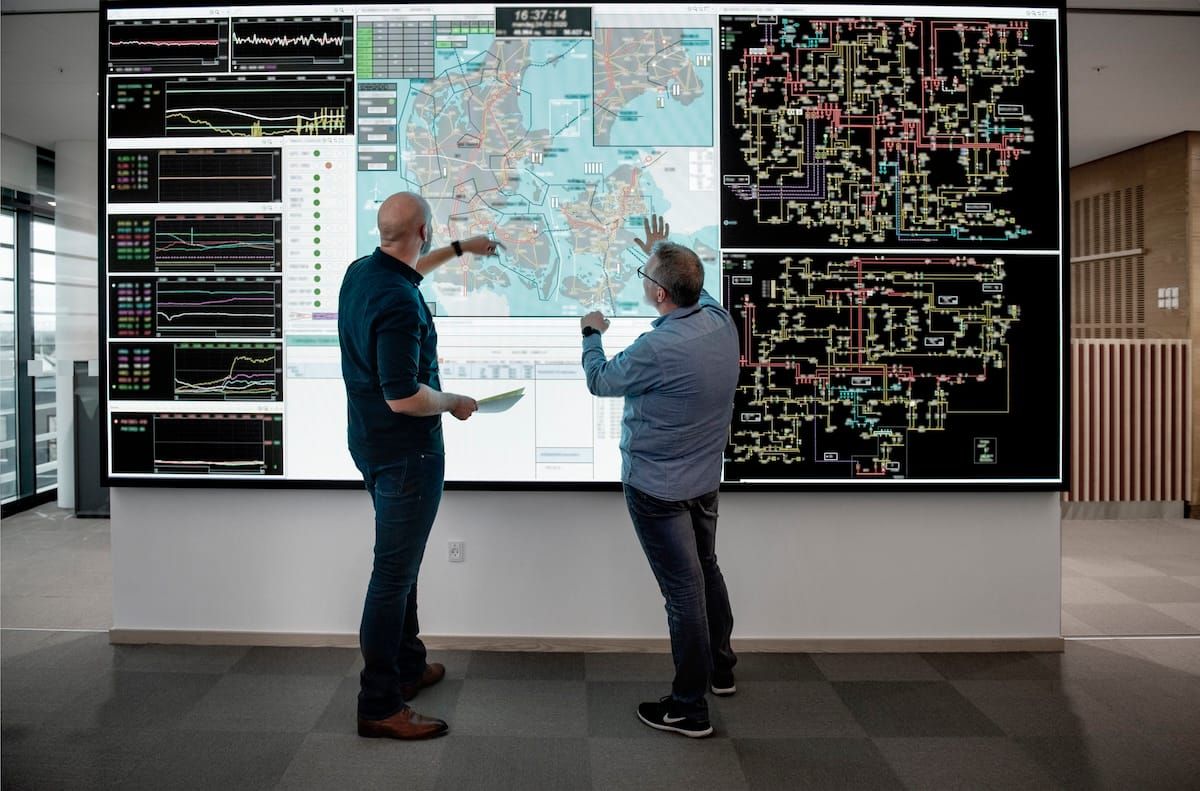
Image: Energinet press image, Kontrolcenter El Photo: Maria Tuxen Hedegaard / Energinet
This article was written with AI assistance and reviewed by the SDC-Platform editorial team before publication.